Inside Plugin Manager: Composable Agentic Extension Bundles
Direct Answer: The aiFetchly Plugin Manager provides developers with an integrated package management system that bundles AI Skills, Subagents, Slash Commands, Lifecycle Hooks, and MCP servers into unified, declarative extensions. Supporting six distribution sources—including Git, GitHub releases, and npm—the engine guarantees supply chain safety through zero-script installations and pre-install risk flag gates.
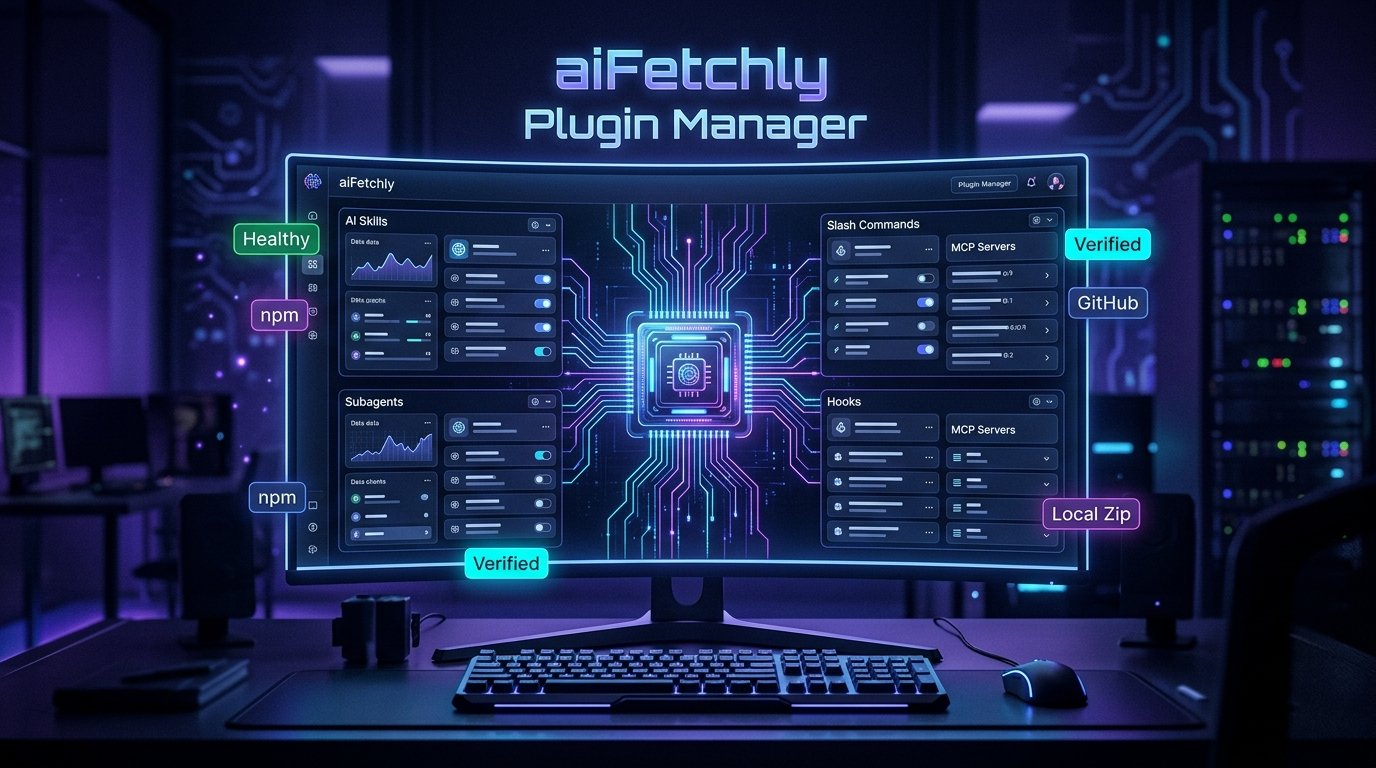
As autonomous AI agents scale across software engineering workflows in 2026, developers face severe "extension sprawl." Configuring an agent typically requires juggling disparate components: custom Python scripts, terminal aliases, MCP JSON configurations, and pre-execution shell hooks across scattered folders. Maintaining and sharing these fragmented pieces across engineering teams is friction-heavy.
The aiFetchly desktop application solves this architectural challenge with its native Plugin Manager. It introduces a unified package system that bundles heterogeneous agent capabilities into a single atomic artifact.
1. Unified Capability Bundling Under One Manifest
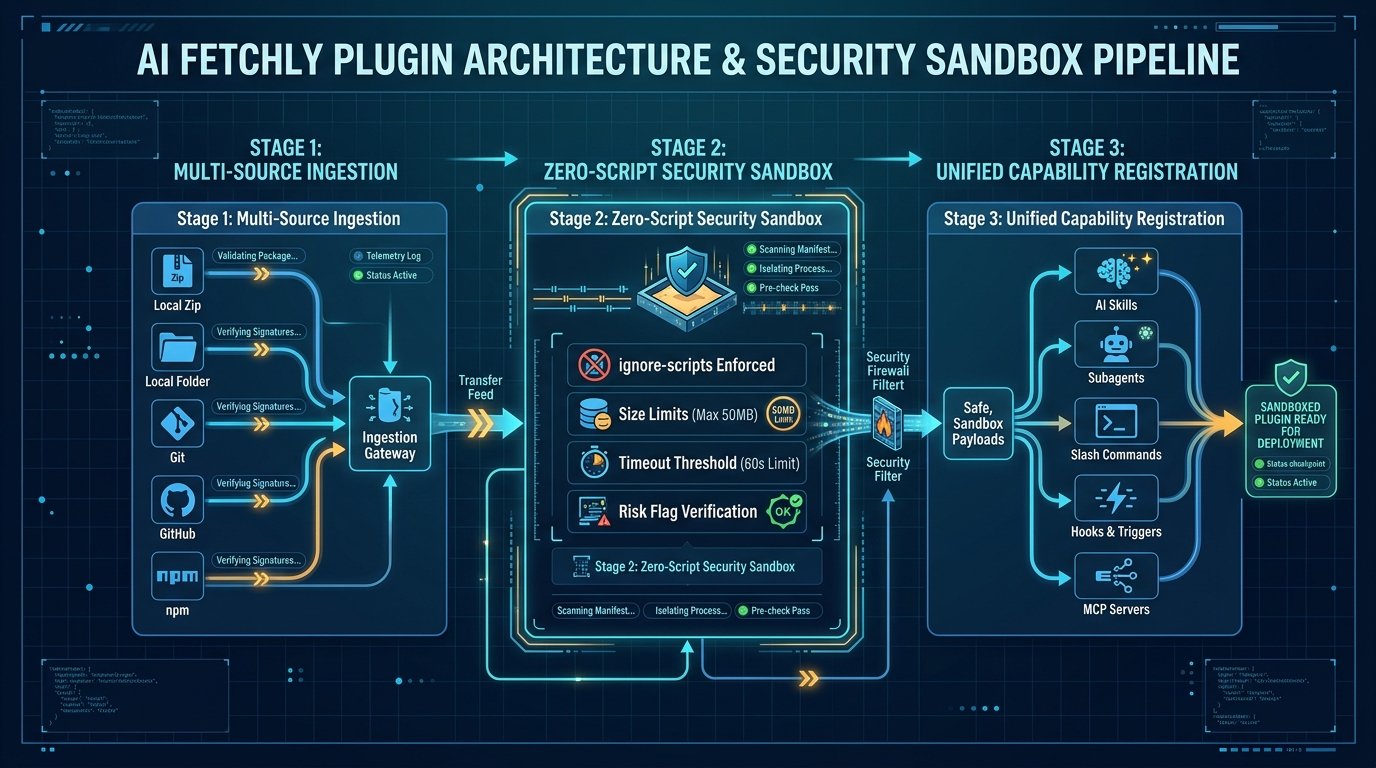
Instead of configuring multiple standalone subsystems, a single aiFetchly plugin bundles up to five distinct capabilities governed by one declarative manifest:
- AI Skills: Modular JavaScript or Python tool runtimes.
- Subagents: Specialized autonomous worker personas configured with isolated system instructions.
- Slash Commands: Keyboard-driven prompt macros and interactive chat utilities.
- Lifecycle Hooks: Pre- and post-tool middleware that inspects, rewrites, or blocks execution.
- MCP Servers: Local or remote Model Context Protocol socket and SSE endpoints.
When a team member installs a plugin, all bundled capabilities register simultaneously; uninstalling cleans them up atomically.
2. Multi-Source Ingestion Engine
Documented in the Plugin Manager specification, aiFetchly supports six distribution channels:
- Local ZIP & Local Folder: Direct installation from disk, caching assets without altering source directories.
- Git & GitHub: Clone public/private repositories via system SSH agents, or download tagged GitHub release assets.
- npm Registries: Ingest packages from public npm or private scoped registries via temporary, non-persisted authentication tokens.
- Direct URLs: Paste arbitrary HTTPS package links with automated protocol routing.
3. Zero-Script Supply Chain Security
Allowing AI assistants to run third-party extensions introduces supply chain risks. aiFetchly enforces strict sandbox boundaries during ingestion:
- Zero Script Execution: The installer never runs
npm install,pip install, or post-install scripts. Package tarballs are unpacked using--ignore-scripts. - Resource Ceilings: Strict quotas enforce a 50 MB compressed cap, a 250 MB unpacked ceiling, and a 5,000 file limit.
- Process Watchdogs: Background git and extraction processes terminate after a 60-second timeout.
4. Marketplace Cataloging & Risk Flag Gating
When browsing community marketplaces, aiFetchly scans manifests for sensitive capabilities before installation. It flags high-impact behaviors—such as spawning MCP servers, declaring system hooks, or unpinned commits—requiring explicit developer confirmation before activating tools.
By pairing atomic capability packaging with deterministic supply chain safeguards, aiFetchly gives developers a reliable framework to share and scale modular agent workflows.
aiFetchly is a local-first desktop AI business agent (free to download). Home: aifetchly.com · plugin manager: docs.aifetchly.com/docs/ai-outreach/plugin-manager
About the author
- aiFetchly - local-first desktop AI agent for marketing outreach. https://www.aifetchly.com
Comments
Join the discussionNo comments yet. Be the first to comment.